
Creating Immersive VR Flight Content for Personal Aviation
Stunning immersive content for the new Let’s Go Fly! app for Apple Vision Pro was created and processed using high-tech cameras and software ideal for the job.
Edited by EE Staff
Cool Stuff
Aug 24, 2026
Aerospace
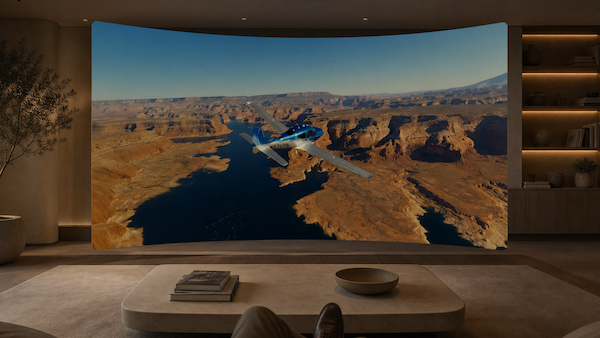
Imagine soaring above incredible sights of the Arizona desert. Cirrus, known for their inclusion in the Personal Aviation space, has created immersive flight demos for its SR22T aircraft to allow such a feeling. The content they’ve created is being used to demonstrate its newest innovations to prospective and current customers—regardless of their location—through the use of their new “Let’s Go Fly!” app for Apple Vision Pro.

Cirrus collaborated with Rogue Labs, an immersive media and spatial app development studio, to produce the content, along with XBrand—who helped produce all of the aerials for Top Gun Maverick and numerous other movies—to capture the aerial cinematography. The shoot started in Page, AZ and followed the aircraft to Sedona, AZ, capturing breathtaking views of Horseshoe Bend, Lake Powell, and the Grand Canyon along the way.
Cirrus and Rogue Labs used Blackmagic Design’s URSA Cine Immersive digital film cameras and DaVinci Resolve Studio editing, color grading, visual effects (VFX), and audio post-production software in the development of the content.
The Experience of Flight
To showcase different angles and the experience of flying the aircraft, URSA Cine Immersives were used to capture footage on the runway, in the cockpit, and were even rigged in aerial gimbals on the nose and rear of a twin prop aircraft that filmed air-to-air footage of the Cirrus SR22T in flight. The cameras were housed in two custom built rigs from Immortal Camera so they could be flown at high speeds on the fixed wing camera ship, allowing the team to capture never before filmed immersive footage of the aircraft in flight.

Cirrus’ Director of Media Anthony Bottini noted, “We wanted to capture iconic desert Southwest landscapes. The region’s dramatic geological formations, deep canyons and vast open spaces were ideal for demonstrating the freedom and visibility that define the Cirrus flying experience. Shooting in these environments required careful attention to horizon stability, cockpit spatial layout, and the viewer’s perceived immersion, especially when portraying altitude, aircraft motion and the thrill of flying your own personal airplane.”
In order to place viewers directly in the pilot’s seat for a first-person sense of flight, Cirrus used a Technocrane for the ramp intro—to create a smooth, cinematic transition into the aircraft. Inside the cockpit, a custom rig was built to position a camera in a natural pilot’s eye position without disrupting aircraft operation. For air-to-air sequences, a camera was mounted on a fixed wing aerial platform, which allowed for the capture of dynamic, close formation visuals that translated exceptionally well in an immersive format. According to John “JR” Racine of Rogue Labs, “All of these setups helped to create the incredible scenery and movement that will pull the audience into the story. Getting the air-to-air footage from outside the airplane was amazing; the footage is absolutely incredible, and we couldn’t have pulled it off with a different setup.”

Bottini explained, “Beyond the URSA Cine Immersive itself, our kit was intentionally streamlined. The camera’s integrated design meant we didn’t need a complex set of peripherals to achieve high quality immersive capture, which made it easier to move quickly between environments and mounting configurations.”
The goal was to create an immersive flight experience for Apple Vision Pro that highlighted the accessibility, capability, and beauty of the Cirrus SR Series aircraft so that viewers could understand how Personal Aviation opens up the world. They were able to capture the beauty and joy of being an owner of a Cirrus aircraft; having the ability to fly wherever you want, whenever you want. The URSA Cine Immersive was chosen for its incredible fidelity and quality of the footage, as well as its ease of use. Plus, the camera’s seamless workflow integration with DaVinci Resolve Studio made post-production far more efficient, allowing the team to focus on the creative side while maintaining the technical precision that Apple Immersive Video demands.

“Being able to capture true immersive 8K 90 fps imagery with a workflow designed specifically for spatial formats was a game changer,” Bottini noted. “While many cameras can approximate immersive footage, the URSA Cine Immersive is purpose built for it, allowing us to maintain consistency between cockpit, Technocrane, and aerial platform shots. Its integration with DaVinci Resolve simplified the ingest and editorial process, reducing technical friction and letting our team focus more on creative decisions.”
The team is proud to be the first aviation OEM to produce an immersive film in this format. Air-to-air sequences allow viewers to experience the sense of flight in a way that feels far more authentic and emotionally engaging than traditional video.
For information: