
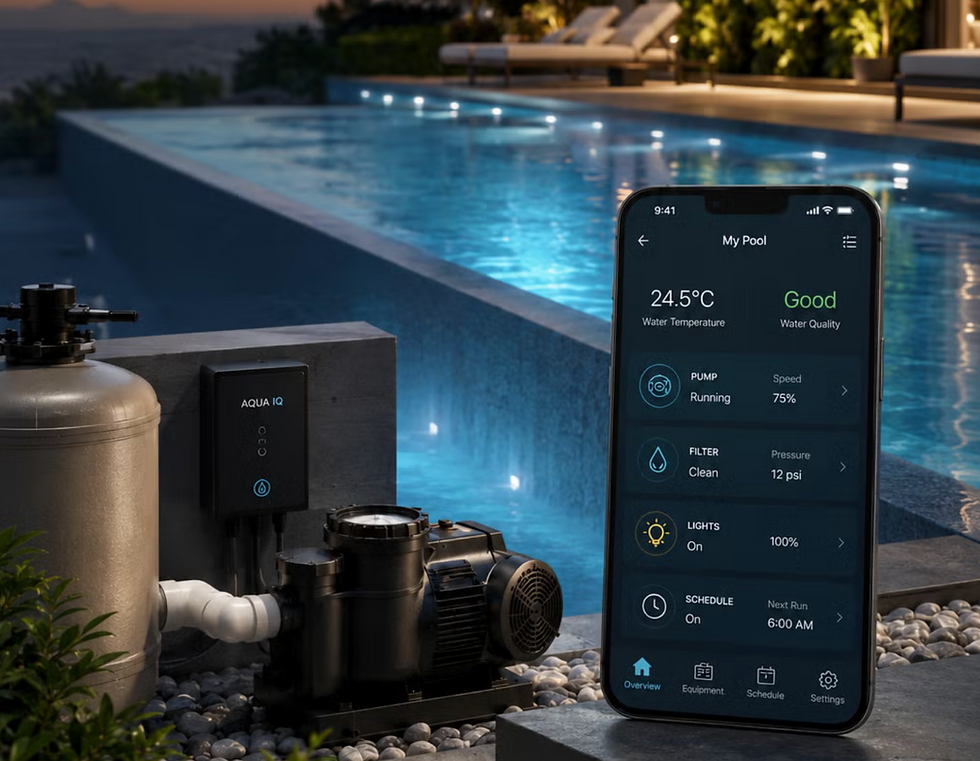
Smart Pool Technology Needs to Be Reliable — This Software Helps Make That Happen
Here’s how a major pool and spa equipment manufacturer ensured its products met the highest standards of quality and reliability.
Edited by EE Staff
Cool Stuff
Aug 18, 2026
A global manufacturer providing smart, sustainable water solutions needed to ensure its products performed reliably under a wide variety of operating conditions. The company offers various products from pumps and filters to automation systems and lighting for a wide range of products in the pool and spa industry. Continuous improvement and innovation are critical to maintain company standards.
The complexity of modern pool equipment, which often integrates sophisticated electronics as well as mechanical components, presents a significant reliability challenge. Pool and spa products are continually exposed to harsh environments including constant exposure to water, chemicals, and extreme temperatures.

These factors lead to a variety of failure modes, which, if not addressed early, during the design and development cycles can result in costly warranty claims, damage to the brand's reputation, and decreased customer satisfaction. The company was challenged to create a standardized approach to bringing innovative products to market quickly while ensuring that they meet the highest standards of reliability and durability.
Comprehensive Reliability Engineering
HBK’s ReliaSoft software suite was able to address the reliability and durability challenges of the company. The overall approach was multi-faceted and leveraged the unique capabilities of XFMEA, Weibull++, and the Accelerated Life Testing module. RealiaSoft XFMEA allowed design and engineering teams to proactively identify failure modes in new product designs well before the products were built. The process involved a systematic analysis of the design to determine how it might fail and what the effects of that failure would be. By identifying high-risk items early in the design process, the team implemented mitigation strategies to improve the product's reliability and safety.

In addition, Weibull++ allowed engineers to analyze life data from testing as well as from field units to understand the reliability characteristics of products. The team could then analyze the data to determine a product’s life expectancy, failure rate, and other key reliability metrics. This made it easy to forecast warranty returns, plan for maintenance, and make data-driven decisions about design improvements.
During Accelerated Life Testing, the team was able to simulate a product’s entire life cycle in a fraction of time. By subjecting components to higher stress levels (e.g., temperature, humidity, vibration), the software extrapolated the results to normal operating conditions, providing rapid feedback on the product's long-term reliability. This allowed for faster product development cycles without compromising on reliability.
The integration of HBK's ReliaSoft software into the customer’s product development process had a significant and lasting impact including improved product reliability, reduced time to market, lower warranty costs, and enhanced brand reputation.
Beyond Pools and Spas
For a company operating in the competitive pool equipment market, product reliability was not just a goal, but a necessity. This same requirement appears in a wide range of consumer and business goods. Implementing a reliability engineering program that ensures products meet the highest standards of quality and reliability can be used widely. The win-win is that customers get long-lasting products while the company benefits from reduced costs, faster innovation, and a stronger brand.
*Images courtesy of HBK and Depositphotos.com.
For information: