
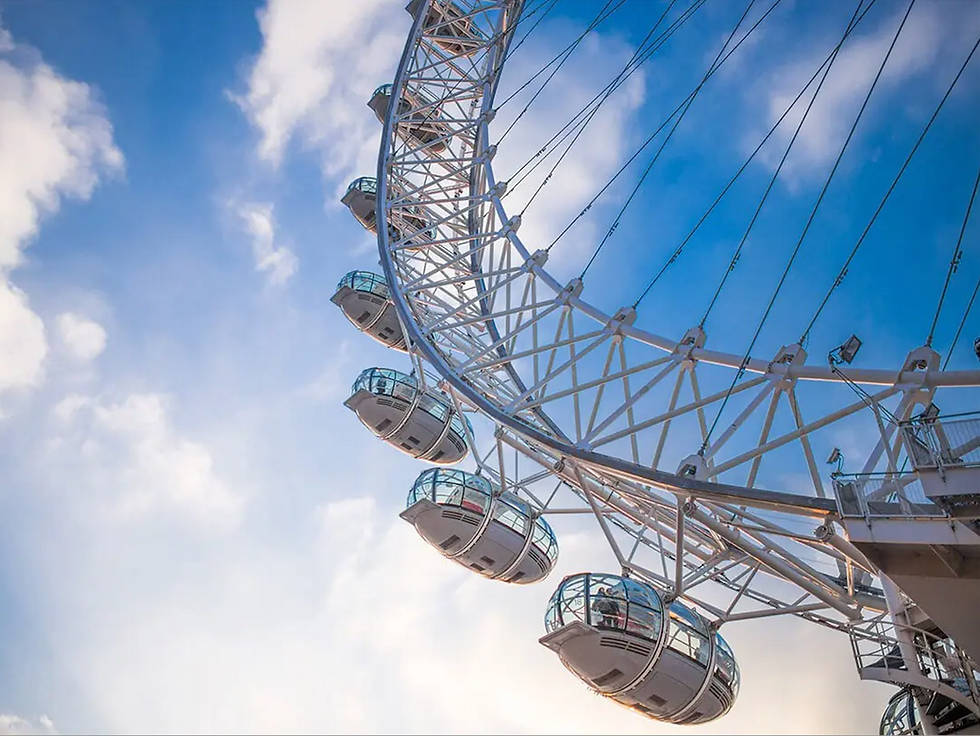
Theme Park Ride Technology Must Maximize Fun, Reliability, and Safety. These Small Components Help Make That Happen
Theme park rides need consistent power, data, and control signals to be present at every turn, flip, and rotation to assure consistent thrills while providing complete rider safety.
Edited by EE Staff
Theme Parks
Oct 13, 2026
Amusement parks can be enchanting worlds where technology, innovation, and thrills combine. Within the amusement industry, the proper application of slip ring technology extends beyond its functionality to embody the combination of operational efficiency and rider safety—two critical concerns for any amusement ride designer or operator.
Any ride that provides motion, whether the vertical spins of a Ferris wheel or the complex rotations of a modern thrill ride, slip rings are used to ensure that power and signals are consistently delivered to the moving parts of the ride. Uninterrupted electric current is vital to rider performance as well as for the sophisticated control systems that monitor and control parameters such as speed, balance, and safety mechanisms.

At their core, slip rings are electromechanical devices designed to bridge the gap between a stationary structure and a rotating one without limiting movement. These devices transmit all the necessary electrical power and signals required for the ride. As the amusement industry continues to evolve, pushing the boundaries of speed, rotation, and design, the demand for reliable and high-performance slip rings continues to increase.
As riders seek greater thrills such as fear and anticipation as rides soar, spin, and flip, safety becomes a greater concern. Theme Park rides must breach that intricate balance between fun and technology to protect riders against unforeseen mishaps. All aspects of safety, such as barriers and safety nets to locking mechanisms and speed controls require the reliable flow of power and signal transmission. An interruption or inconsistency in this flow potentially compromises these systems, posing risks to riders. Slip rings not only help to sustain ride functionality, but they reduce the risk of downtime and ensure ride longevity, all of which contributes to a seamless and fun-filled experience for park visitors.
As amusement park rides push the boundaries of engineering and design, slip rings become a critical component that allows for the intrinsic connection between enjoyment and technology. This connection is empowering the next wave of innovative ride experiences, supporting design engineers in pushing the envelop ride after ride.
Slip Ring Types

Capsule slip rings are incorporated in rides where space is limited yet power and signal transmission remain high. These slip rings are versatile and compact without compromising performance. Capsule slip rings are often used in control panels, light fixture, and miniature rotating displays.

Through-bore slip rings have a hollow shaft design that allows them to be integrated around pre-existing mechanical structure. This feature is especially beneficial for larger amusement rides. Their unique structure enables them to carry a variety of signals and power loads while also accommodating other components such as hydraulics or pneumatics through the unit’s central void. Through-bore slip rings are used on Ferris wheels and other sophisticated large-scale, rotational rides.

Pancake slip rings are for rides requiring a low profile. These flat, disc-like devices offer a solution where axial length is limited while radial space is plentiful. They are suitable for applications where equipment needs to be fitted into areas with restricted height, such as turntables and stage equipment used in performances or rotating platforms that demand a sleek integration without impacting ride design integrity.

Mercury slip rings represent a specialized category used in scenarios where exceptionally low electrical resistance and high performance are required. Containing liquid mercury as a conductive medium, they can transfer current and signals with minimal loss, making them highly efficient. However, due to mercury being a hazardous substance, its use comes with stringent safety measures and is usually limited to very specific applications within amusement rides where no other slip ring can meet the required performance levels. In applications where their performance benefits outweigh the safety concerns—such as in highly sophisticated simulation rides or high-speed rotating platforms—mercury slip rings play a crucial role.
The selection of slip rings in amusement rides is dictated by a variety of factors including size constraints, power and data transmission requirements, and specific operational needs. Each type plays a vital role in ensuring rides operate seamlessly, safely, and delightfully thrilling.
For information:
Lead image from DepositPhotos.